
Join distinct IP networks
Layer 3 routing connects separate subnets without requiring every location to share one Ethernet broadcast domain. The proposed topology and access services are assessed together.
Layer 3 routing connects separate subnets without requiring every location to share one Ethernet broadcast domain. The proposed topology and access services are assessed together.
A suitable private IP service may connect sites and central resources. Isolation, route exchange, internet access and customer equipment responsibilities must be specified.
Review existing IPv4 networks, any overlapping ranges, growth and IPv6 requirements. Address availability and service support must be confirmed before design commitments are made.
Static or dynamic routing may be suitable depending on the service and topology. Protocol support, policy controls and operational responsibilities are confirmed during assessment.
Define where internet access, firewalls, cloud connections and shared applications sit. These functions are separate inclusions rather than automatic features of a routed service.
Capacity, supported traffic treatment, monitoring and fault handling are considered for the selected services. The proposal identifies the scope of any managed functions.
Routing determines where traffic is forwarded. Firewall policy, encryption and identity controls determine which communications should be permitted and protected; they require their own design.
The accepted proposal records network boundaries, handover interfaces, address plans, routing responsibilities and testing. It also identifies any customer-managed components and the support process for a fault crossing those boundaries.
Provide current subnets, routers, sites and service interfaces.
Identify which networks, users and applications must communicate.
Describe segmentation, routing control and security requirements.
Agree the configuration, test plan and operational handover.
Layer 2 transports Ethernet frames between endpoints; Layer 3 routes IP traffic between networks. The suitable service depends on your topology and operating requirements.
No. A routing design does not automatically supply firewall inspection, access policy or end-to-end encryption.
Existing addressing can be reviewed. Overlapping ranges, route policies and the service design may require changes.
No protocol is assumed. Compatibility, service support and management responsibilities must be confirmed for the proposed design.
KernWi-Fi works with MikroTik and UniFi platforms. The appropriate equipment, configuration and management arrangements depend on the site, service handoff and agreed project requirements.
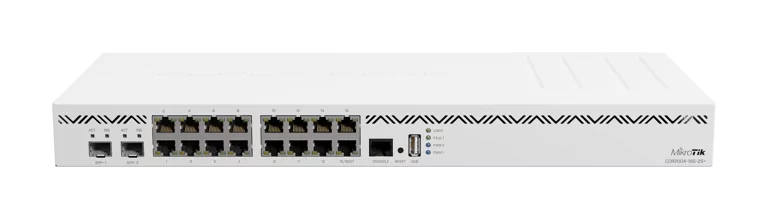
Equipment shown is illustrative and is not automatically included with a service. Product imagery: MikroTik and Ubiquiti.
Tell us about your locations, applications, existing services and the outcome you need. KernWi-Fi can assess suitable options and prepare a proposal with a clear scope.