Gateways, switching and administration
Routing, network segmentation, Power over Ethernet, traffic controls, multi-WAN options and remote administration.

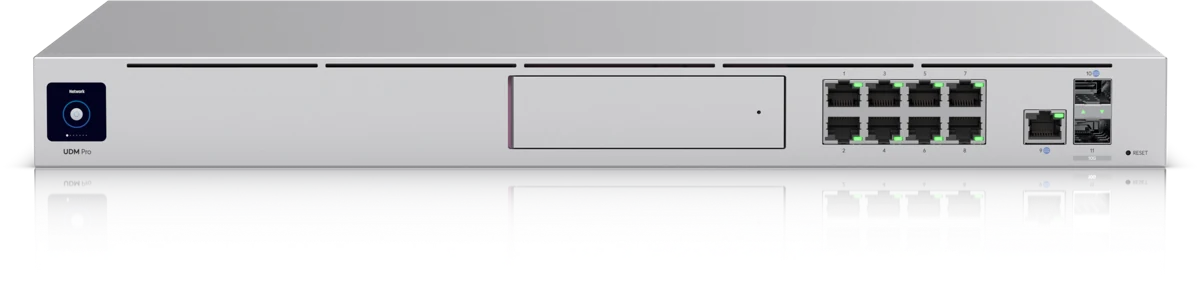

Representative UniFi equipment. Your system is selected to suit your site.
Product imagery: Ubiquiti.
A UniFi environment can bring routing, switching, Wi-Fi, video surveillance, door access and administration into a coordinated solution. The appropriate combination depends on the property, users, devices, applications, risk controls and operational needs.
Routing, network segmentation, Power over Ethernet, traffic controls, multi-WAN options and remote administration.
Coverage and capacity planning for homes, workplaces, venues, operational areas and suitable outdoor environments.
Camera, recorder, storage and viewing solutions planned around the site, retention requirements and authorised users.
Access readers, door controllers, entry communication and permissions where suitable and within the approved project scope.
Suitable customer environments can be administered through KernWi-Fi-hosted UniFi Cloud Controllers, with agreed access, configuration management, backups and support arrangements.
Dedicated VLANs can support separation for staff, guests, voice, cameras, connected devices and operational systems. VLANs are one component of the overall network and security design.
KernWi-Fi can assess the complete local network rather than treating gateways, switches and access points as isolated devices.
Routing, multiple internet services, suitable backup connectivity and remote administration.
Port capacity, uplinks, power budgets, equipment locations and future expansion.
Appropriate separation for staff, guests, operational systems, cameras and connected devices.
Consistent configurations, authorised access and coordinated management across suitable locations.
Access-point quantity and placement depend on construction materials, interference, user density, connected devices, applications, available cabling and suitable mounting locations.
Coverage planning for homes, offices, venues, warehouses and shared spaces.
Capacity planning for meeting areas, event spaces, guest environments and operational zones.
Suitable outdoor access points, cabling, mounting, weather exposure and power considerations.
Guest networks, suitable captive portal options and separation from business or household systems.
Coordinated access-point placement, radio settings and wired uplinks for a consistent environment.
Coverage gaps, interference, ageing equipment, topology and upgrade-path assessment.
The design should consider camera purpose, placement, lighting, field of view, recording retention, network capacity, storage and authorised access.
Camera types selected for the environment, required view and installation conditions.
Local recording equipment and storage planned around camera count, settings and retention needs.
Appropriate browser, mobile and local viewing pathways for approved users.
PoE capacity, switching, uplinks, equipment locations and continuity considerations.
Suitable access-control and intercom options can be assessed as part of a broader UniFi environment. Final scope depends on the doors, hardware, cabling, power, building requirements and applicable licensing or trade responsibilities.
Readers, controllers, credentials and permissions for suitable controlled-entry points.
Visitor communication and approved entry workflows where suitable for the site.
Authorised-user permissions and available event records configured for the agreed purpose.
Coordination with the UniFi network and Protect environment where technically and operationally suitable.
Many sites already have a partial or ageing UniFi environment. A review can identify current capability, support risks and practical upgrade priorities.
Review the gateway, administrator access, configuration backup and remote-management approach.
Assess available ports, power budgets, uplinks, capacity and equipment condition.
Review access-point coverage, wired uplinks, interference and the network topology.
Assess recording equipment, storage capacity, retention settings and supported camera environment.
Confirm who owns supplied equipment and what remains part of any managed service.
Define customer and KernWi-Fi administration access, permissions and handover arrangements.
Confirm responsibility for configuration records, available backups and change control.
Confirm where recordings are stored, who can access them and the customer’s lawful-use responsibilities.
A reliable UniFi solution depends on appropriate cabling, power, mounting, switching and upstream connectivity. KernWi-Fi can assess the supporting infrastructure as part of the project scope.
Data cabling, outlets, cabinets and fibre uplinks where required by the design.
Switch power budgets, suitable equipment power and UPS planning where required.
Suitable mounting, cabling routes, exposure, access and equipment protection.
Cross-reference Point-to-Point Links where separate buildings require a qualified link.
Authorised configuration changes, fault investigation and administration support.
Equipment status, firmware coordination, support status and replacement planning.
Coordinated documentation, standards and support pathways across suitable customer sites.
Equipment selection, coverage, capacity, storage, recording retention and system functionality depend on the site, cabling, power, network design, selected equipment and operational requirements. Final scope and performance expectations are confirmed after assessment.
Customers are responsible for the lawful use of surveillance, recording and access-control systems, including applicable privacy, workplace, signage, authorised-access and record-retention obligations.
Tell us about the property, users, devices, applications, Wi-Fi, surveillance, access and support requirements. KernWi-Fi can assess the environment and prepare a project-specific proposal.